Designing for Hillside & View Properties

Steep slopes, dramatic grade changes, and sweeping views are often treated as obstacles to work around. At Montgomery Robbins, Inc., we treat them as the starting point for some of the most rewarding landscape design work in the Bay Area.
What Makes Hillside and View Properties Unique Opportunities
Hillside and view properties create opportunities to transform challenging terrain into highly customized outdoor living environments.
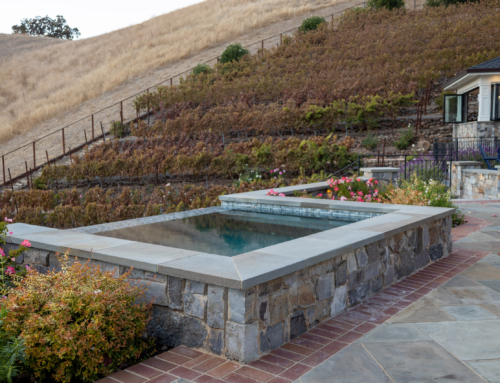
Steep slopes, dramatic grades, and expansive vistas call for a landscape design approach that sees the site’s potential, not just its constraints. A home overlooking a remarkable view or nestled into a hillside can become the ideal setting for terracing, structural decking, and engineered retaining walls that create distinctive outdoor living spaces. On many Bay Area hillside properties, the terrain itself becomes part of the composition, framing the architecture, shaping circulation, and connecting the home more naturally to the surrounding landscape. Thoughtful hillside landscape design can turn elevation changes into memorable experiences that feel both dramatic and effortless.
Evaluating the Topography Before You Design
Every hillside project begins the same way: by studying how the land moves, including slope changes, elevation patterns, drainage flow, and natural transitions throughout the property.
Topography is the foundation of successful hillside landscape design. Understanding how water travels across the site, how steep different areas are, and where natural plateaus or breaks in slope occur helps determine where outdoor rooms, pools, terraces, and planting zones can function comfortably and safely. Careful grading can soften steep transitions, reveal opportunities for terraced living spaces, and ensure the landscape works with the existing landform rather than against it. This level of topographic analysis is especially important throughout the Bay Area, where hillsides, clay soils, drainage conditions, and microclimates all influence long-term landscape performance.
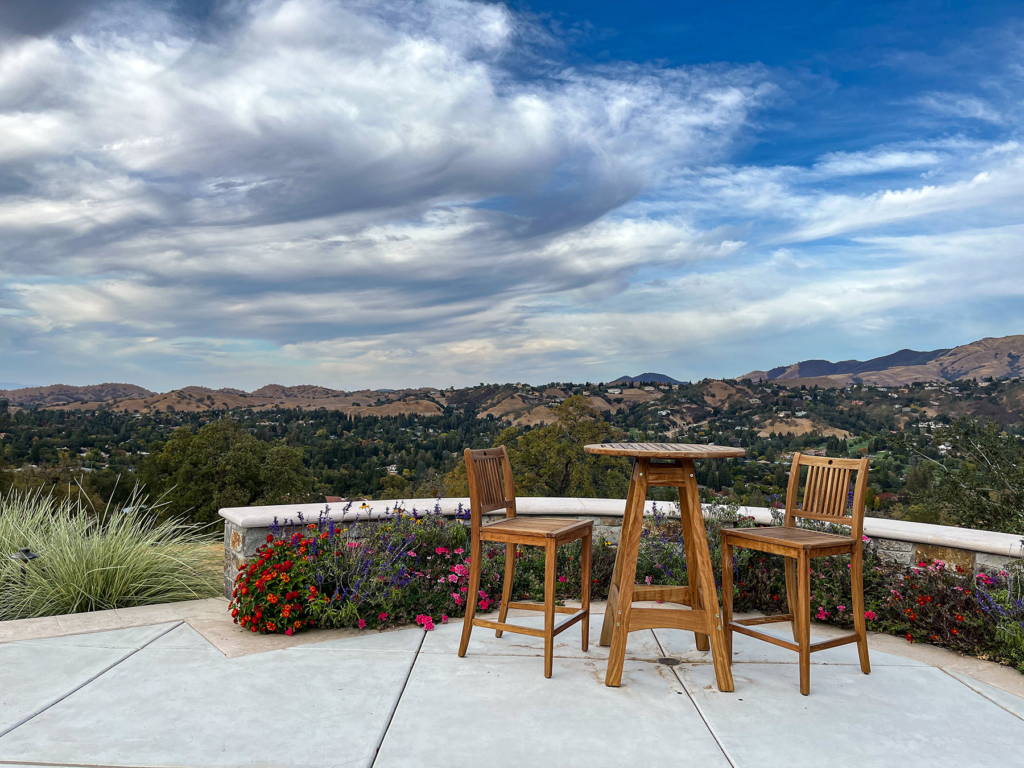
Once the site is understood, the next challenge is protecting what makes it special. We keep design elements low, intentional, and carefully scaled so the view remains the focal point.
On view properties, the goal is to frame and extend the scenery rather than compete with it. We use strategies such as floating decks, glass or minimal railings, slender planting palettes, and thoughtfully proportioned structures to preserve important sightlines. Vertical elements are positioned carefully to anchor the composition without interrupting key vantage points. By treating the distant landscape as a borrowed backdrop, the hillside design becomes a quiet foreground that draws the eye outward and makes the surrounding scenery feel fully integrated into the daily living experience.
Why Infinity-Edge Pools Are So Effective on Hillside Sites
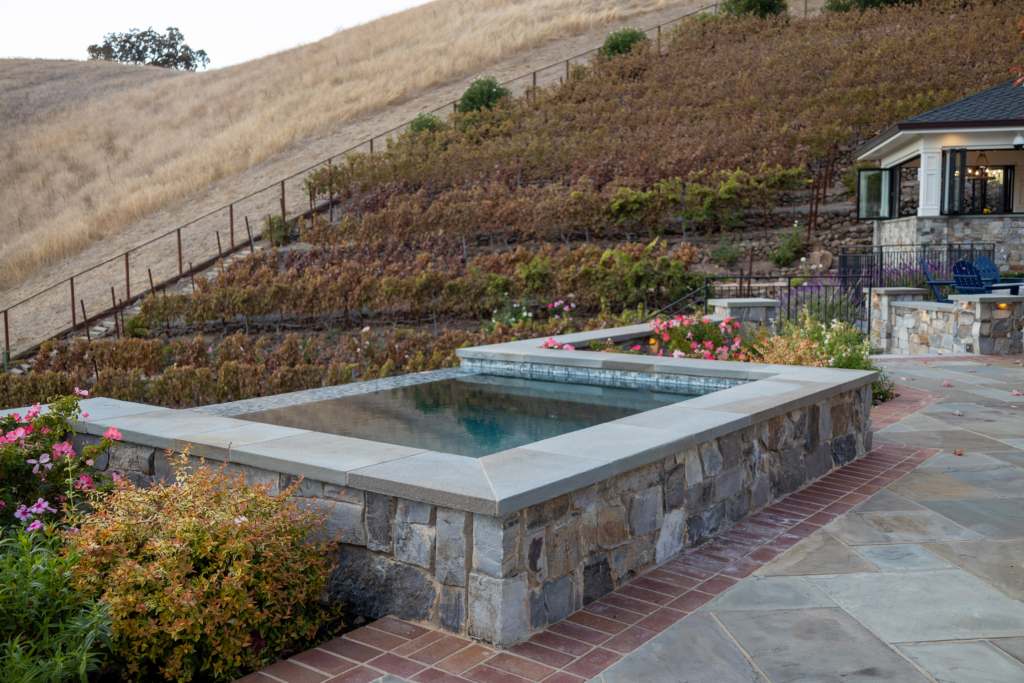
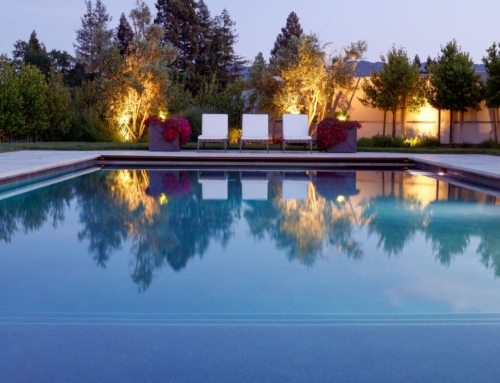
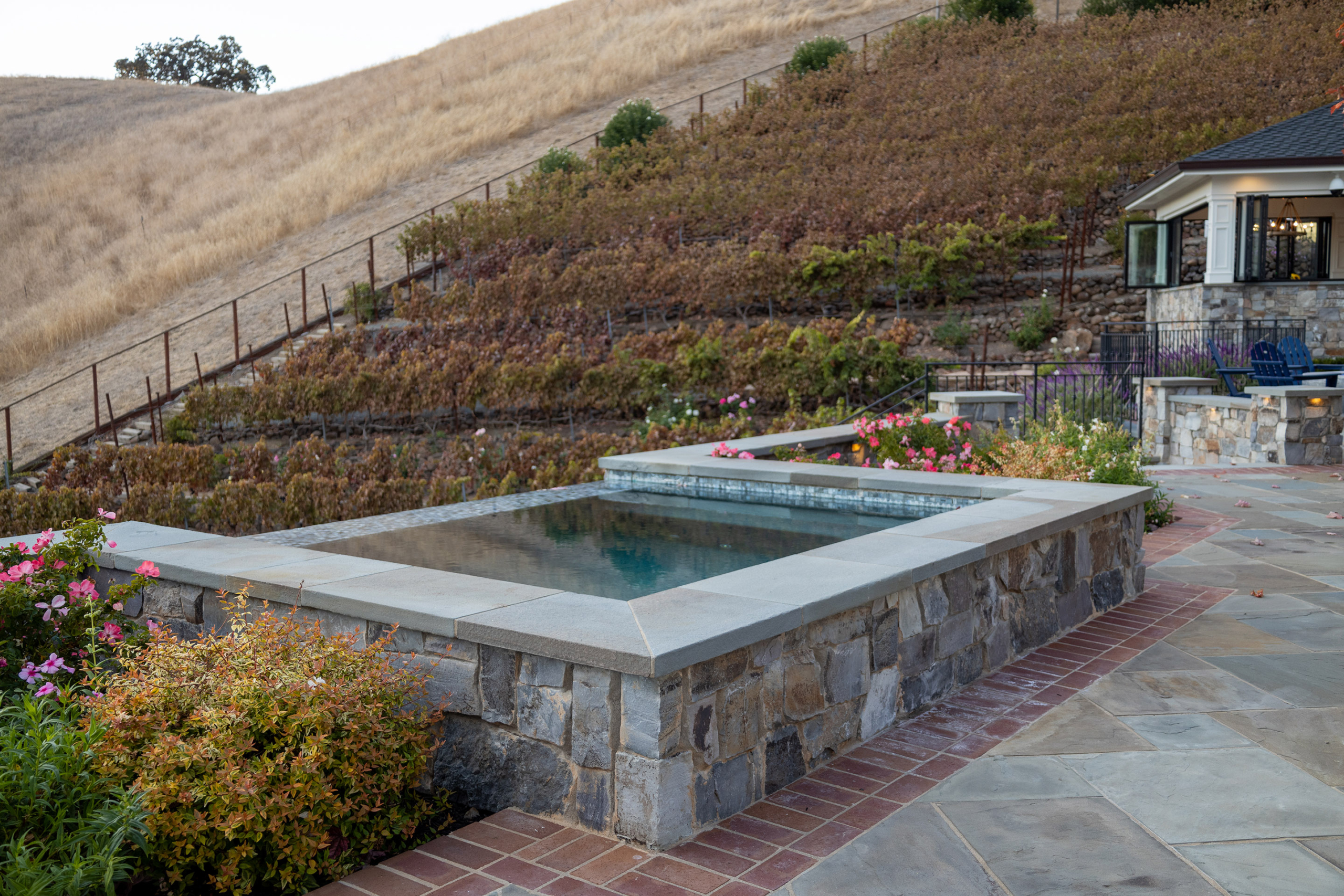
Few features capitalize on a view the way an infinity-edge pool does. These pools visually merge water with the horizon, amplifying the drama and expansiveness of a hillside view.
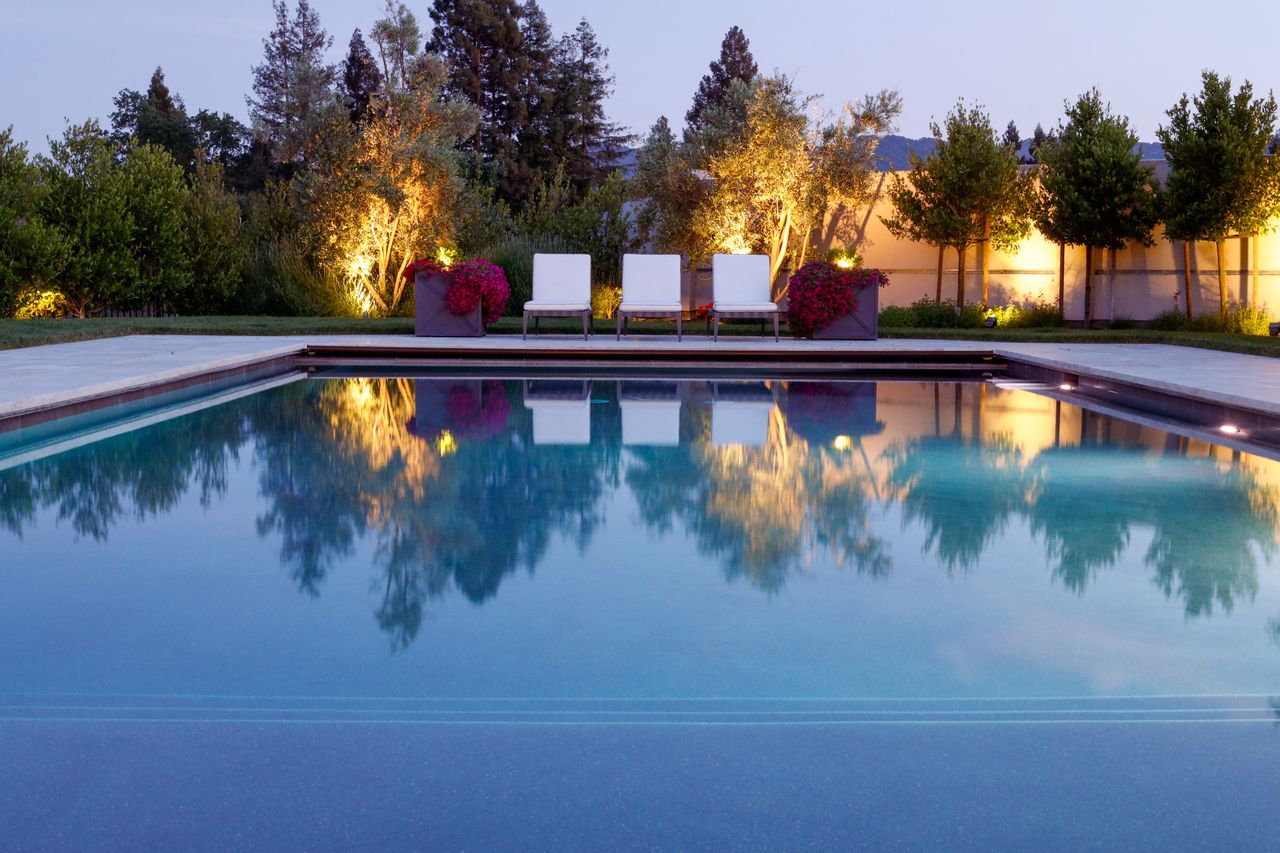
The defining feature of an infinity-edge pool (also called a vanishing-edge or zero-edge pool) is the way the pool boundary appears to disappear entirely. Water spills over a hidden edge into a concealed catch basin, creating the illusion that the surface extends endlessly into the surrounding landscape. On hillside properties overlooking dramatic scenery, this sense of visual limitlessness becomes especially powerful. Integrating an infinity-edge pool into a floating deck or terrace helps connect the architecture, water, and distant landscape into one cohesive experience. Even from outside the pool, the effect can transform how the property feels and how the view is experienced day to day.
Creating Usable Outdoor Living Spaces on a Steep Slope
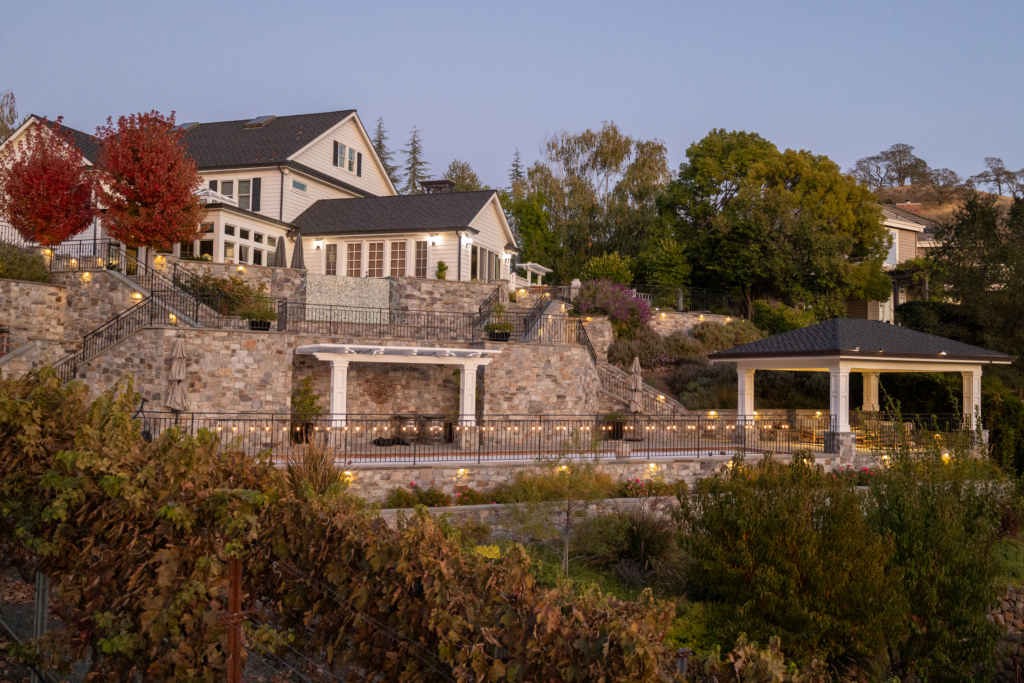
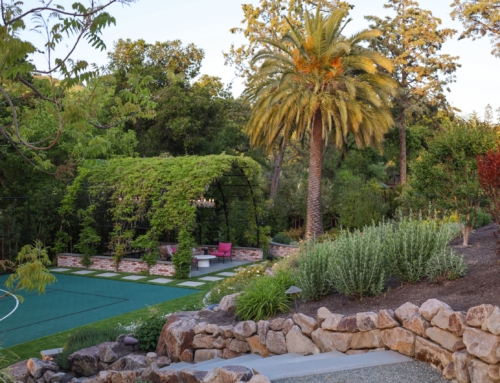
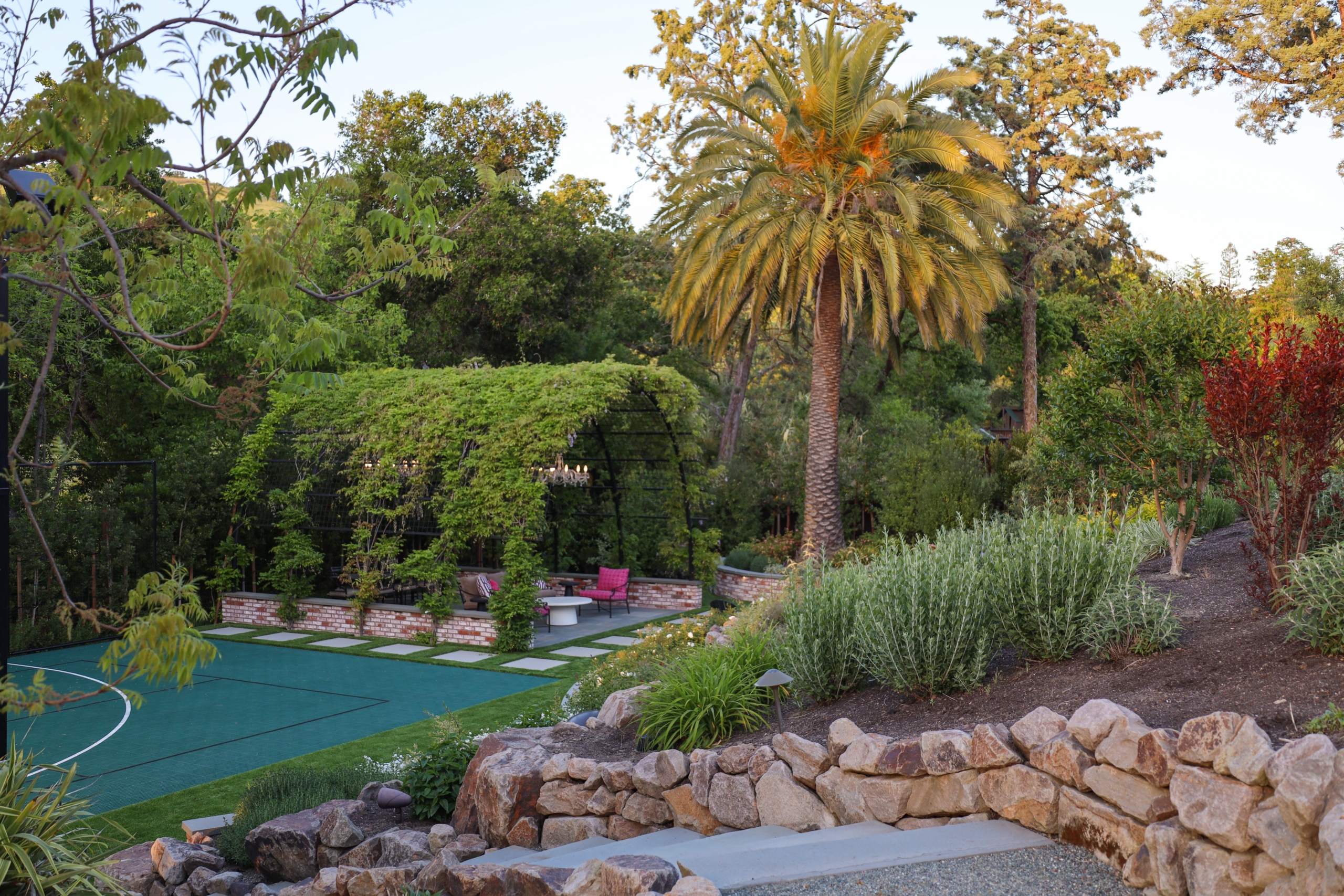
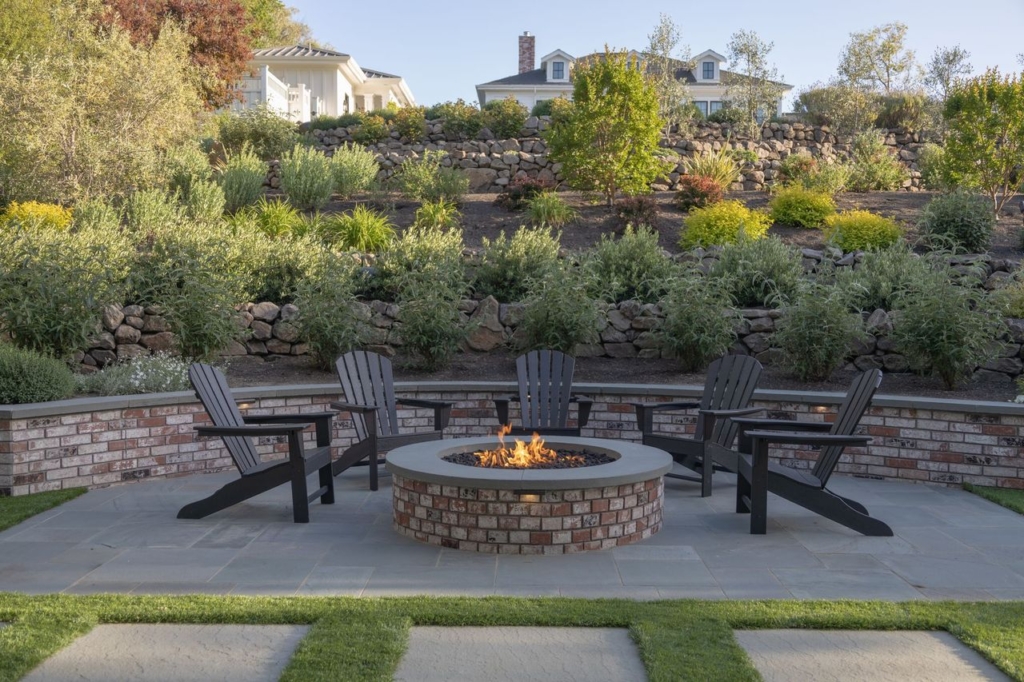
Beyond the pool, hillside owners want a landscape that actually functions for daily living. We transform steep slopes into a series of purposeful, level outdoor living spaces through terracing, structural decks, retaining walls, and thoughtful grading.
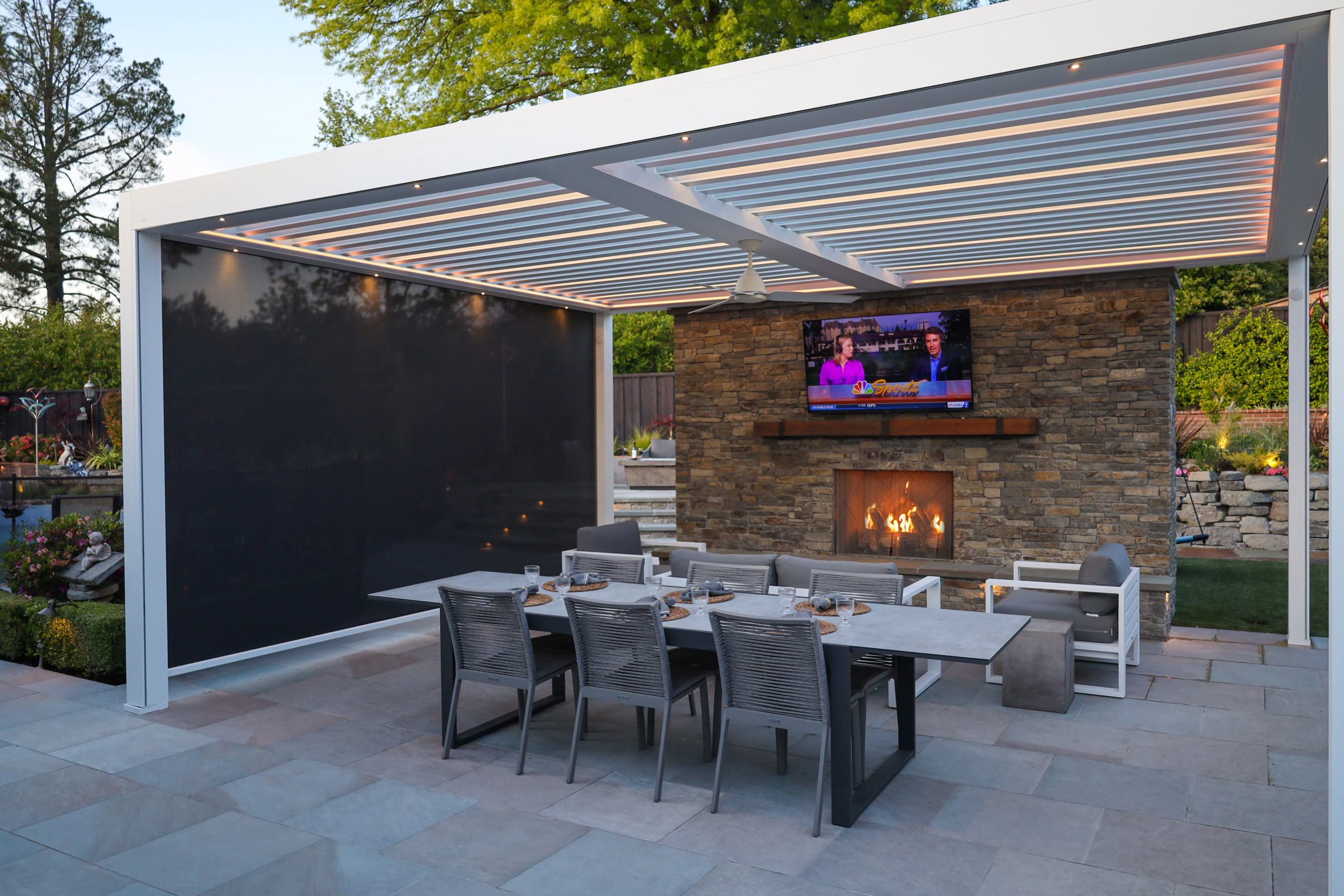
On hillside properties, outdoor rooms rarely exist as one large flat plane. Instead, the landscape is organized into a sequence of experiences: dining terraces near the kitchen, lounge decks oriented toward the view, pool platforms, fire features, and circulation paths that connect each space comfortably and intuitively. Terracing, engineered retaining walls, and structural decks allow these areas to feel open, inviting, and functional while still respecting the natural grade of the site. The result is a hillside landscape that feels effortless to move through, even on terrain that originally seemed difficult to use.
Keeping Hillside Landscapes Safe and Structurally Stable
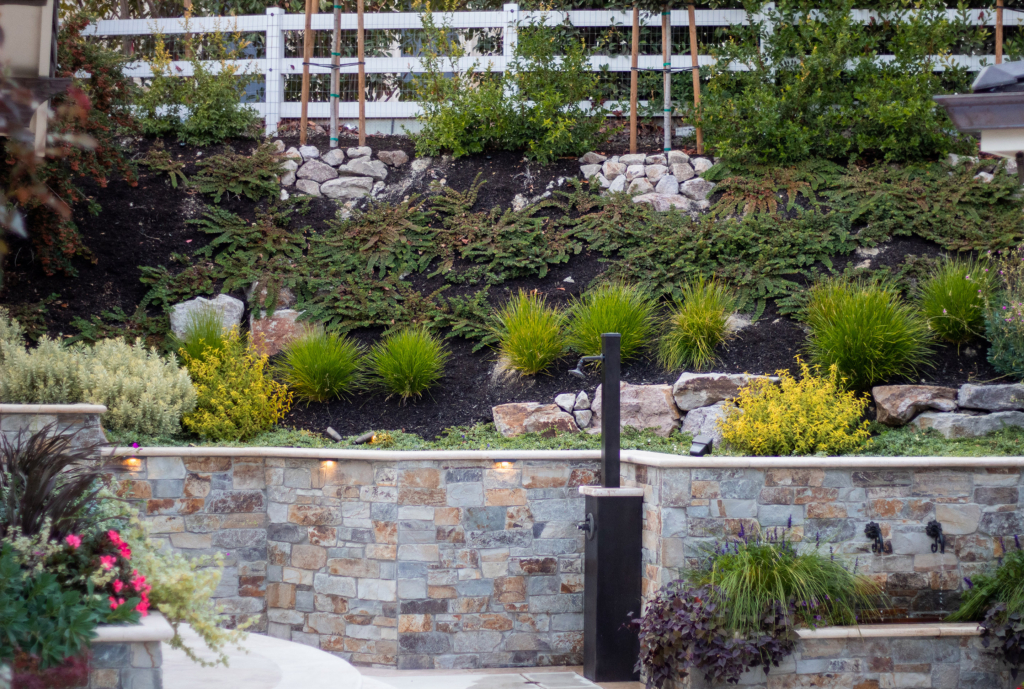
None of this works without stability. Hillside landscape stability depends on grading, retaining, drainage, and engineering systems that work together as one coordinated solution.
We evaluate slope angle, soil conditions, water movement, and proximity to structures to determine where reinforcement and stabilization are needed. Engineered retaining walls, stepped terraces, and carefully planned cuts and fills help manage the forces acting on the hillside while creating safer, more usable outdoor spaces. Subsurface drainage systems relieve hydrostatic pressure behind walls, while surface grading directs water away from foundations, walkways, and gathering areas. Throughout the Bay Area, collaboration with geotechnical and structural engineers adds another level of assurance, particularly on sites affected by seismic activity, expansive soils, or complex terrain conditions.
Why High-End Drainage Is Especially Important on Hillside Sites
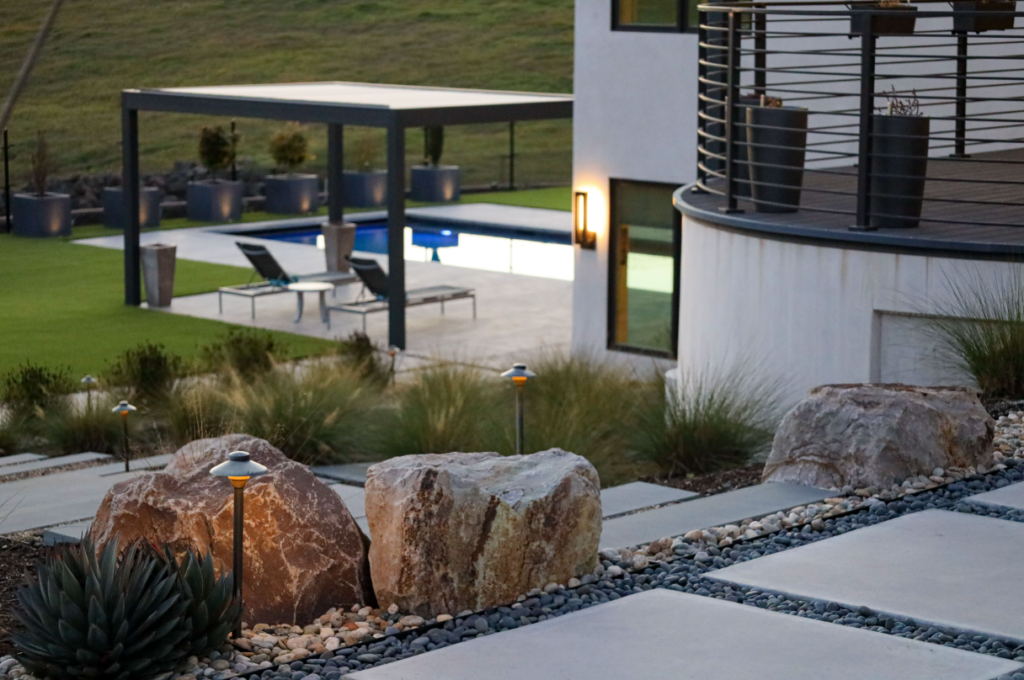
Stability and water management go hand in hand. On hillside properties, poorly managed water can damage structures, erode soil, and destabilize slopes, making effective drainage both essential and discreet.
Beyond surface runoff, hillside landscapes rely heavily on subsurface drainage systems such as French drains, perforated pipe networks, and drain fields to safely collect and redirect water away from retaining walls, foundations, terraces, and neighboring properties. These hidden systems may connect to dry wells, infiltration galleries, or discreet daylight outlets that preserve the visual integrity of the landscape. At the surface, solutions such as linear slot drains can disappear seamlessly into pool decks, terraces, and driveways while maintaining a clean architectural aesthetic. Softer drainage strategies, including bioswales, rain gardens, and permeable paving, help slow, absorb, and filter runoff while becoming part of the planting design itself. The goal is a hillside drainage system that performs exceptionally well without introducing unnecessary visual clutter.
Designing for Accessibility and Safety at Every Age
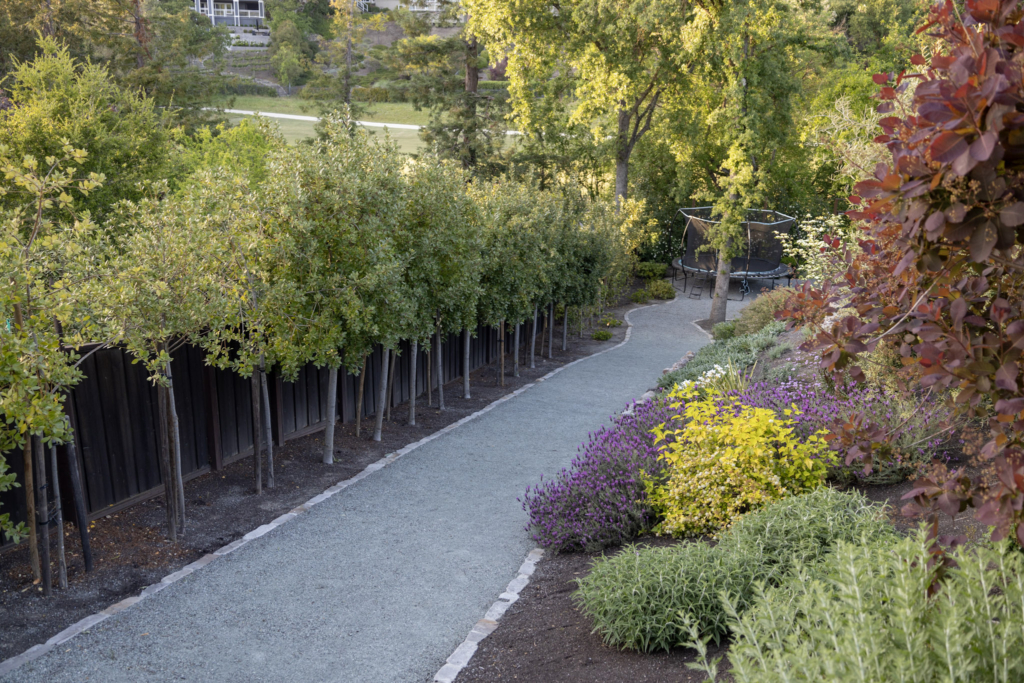
A hillside landscape should feel effortless for everyone who uses it, not just the most sure-footed. We design circulation, grading, lighting, and transitions so moving through a hillside landscape feels intuitive, secure, and comfortable for a wide range of users.
Paths and stairs are carefully proportioned, with appropriate tread depths, riser heights, and landings that create natural rest points and view moments throughout the property. Where possible, gently sloped walkways, ramps, and softened transitions help reduce physical strain for aging family members or anyone with limited mobility. Handrails, guardrails, and edge protection are thoughtfully integrated into the architecture of decks, terraces, and circulation spaces rather than feeling visually intrusive. Layered lighting, especially around steps, thresholds, and elevation changes, improves safety after dark while preserving warmth and ambiance. Accessibility is approached as an integral part of the design process so functionality, comfort, and beauty work together seamlessly.
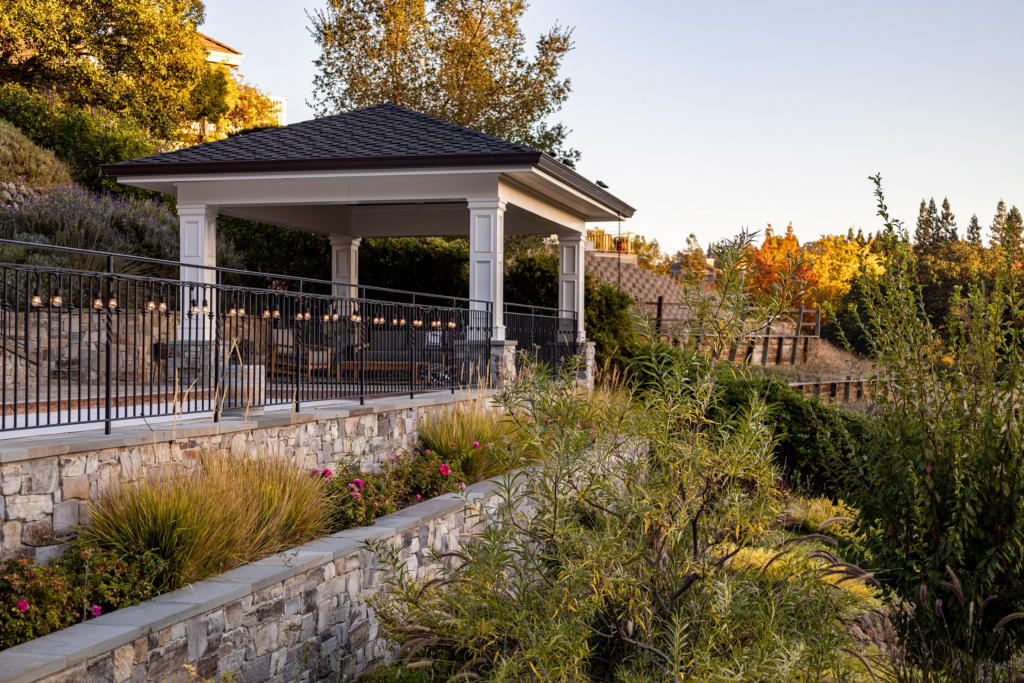
Hillside landscape projects often require additional permitting, engineering review, and coordination with multiple professionals to ensure safety, stability, and code compliance.
Depending on the local jurisdiction and scope of work, retaining walls, grading modifications, drainage improvements, pools, structures, and other hillside construction elements may require permits, inspections, and engineered approvals. We frequently collaborate with structural and geotechnical engineers, architects, surveyors, and contractors so the landscape design, technical requirements, and construction methods work together cohesively from the beginning. This integrated approach is especially important on steep Bay Area properties, where drainage, slope stability, seismic considerations, and community guidelines all influence how a project is designed and executed.
We approach each hillside property as a custom balance of beauty, stability, functionality, and long-term performance shaped by decades of Northern California landscape design experience. If you’re planning a landscape investment and want to get the foundation right, we’d love to talk.